
Tretinoin + Hydroquinone: The Complete Combination Guide for UK Users

Tretinoin and hydroquinone are two of the most clinically substantiated ingredients for treating hyperpigmentation, melasma, and uneven skin tone. Used in combination, they act synergistically — tretinoin accelerating cell turnover and enhancing penetration of other actives, hydroquinone inhibiting melanin production at the source. This combination forms the basis of several established medical-grade treatment systems, including the Obagi Nu-Derm Rx protocol.
Both tretinoin and prescription-strength hydroquinone (4%) are prescription-only medicines in the UK. This article is for educational purposes only. Always follow the guidance of your prescribing clinician.
How each ingredient works
Tretinoin
- Accelerates epidermal cell turnover, dispersing melanin granules
- Enhances penetration of co-applied ingredients including hydroquinone
- Stimulates collagen synthesis in the dermis
- Normalises follicular keratinisation, relevant to acne-associated pigmentation
Hydroquinone
- Inhibits tyrosinase, the enzyme responsible for melanin synthesis
- Reduces production of new pigmentation
- Fades existing dark spots and areas of hyperpigmentation
- Most effective when used alongside a retinoid, which improves its penetration
Which strengths are used
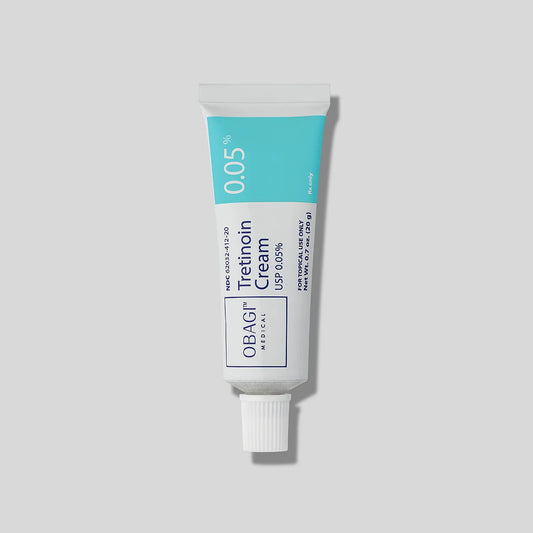
Tretinoin is available at 0.025%, 0.05%, and 0.1%. Most prescribers recommend starting at 0.025% or 0.05% for this combination, as the addition of hydroquinone increases the overall irritation burden. For a detailed comparison of tretinoin strengths, see our guide to tretinoin 0.025% vs 0.05% vs 0.1%.
Hydroquinone at 4% is prescription-only in the UK and is the strength used in clinical treatment protocols. 2% formulations are available over the counter but are generally considered less effective for established hyperpigmentation.
How to introduce the combination
Starting both ingredients simultaneously significantly increases the risk of irritation. Most prescribers recommend a staged introduction:
Weeks 1–2: tretinoin alone
Begin tretinoin at 2–3 nights per week to allow the skin to start adjusting before hydroquinone is added. Follow your prescriber's specific instructions. See our beginner's guide to starting tretinoin for detailed application guidance.
Weeks 3–4: introduce hydroquinone
Add hydroquinone on the same nights as tretinoin, continuing at 2–3 nights per week. Monitor for irritation before increasing frequency.
Week 5 onwards: increase frequency gradually
If the combination is well tolerated, frequency can be increased gradually — to 4–5 nights per week, then nightly if appropriate. This should be guided by your prescriber.
Application order
The recommended evening routine for this combination:
- Cleanse and pat skin dry
- Wait 20–30 minutes until skin is completely dry
- Apply hydroquinone to areas of pigmentation (or all over, depending on your treatment plan)
- Wait 5–10 minutes for absorption
- Apply tretinoin (pea-sized amount for the entire face)
- Wait 20–30 minutes, then apply a fragrance-free moisturiser
Some prescribers recommend applying tretinoin before hydroquinone. Follow your prescriber's specific instructions — consistency of method matters more than the order itself.
What to expect
Weeks 1–4
Adjustment period. Dryness, peeling, and redness are common. Pigmentation may temporarily appear darker as surface melanin is brought up — this is a normal part of the process, not worsening.
Weeks 6–8
Irritation typically begins to subside. First signs of improvement in pigmentation become visible.
Weeks 12–16
Significant improvement in dark spots, skin tone, and texture is typical for consistent users.
Weeks 16–24
Continued improvement and consolidation of results.
Managing side effects
The combination of tretinoin and hydroquinone carries a higher irritation burden than either ingredient alone. Key management strategies:
- Apply to completely dry skin — moisture significantly increases penetration and irritation
- Use a gentle, non-foaming cleanser
- Apply a rich, fragrance-free moisturiser 20–30 minutes after tretinoin
- Wear broad-spectrum SPF 50 every morning without exception
- Reduce frequency if irritation becomes severe — contact your prescriber before making changes
- Avoid other active ingredients (AHAs, BHAs, vitamin C) during the adjustment period
Important safety considerations
- Hydroquinone should not be used continuously for more than 4–6 months without a break, due to the risk of ochronosis — a rare but serious condition causing blue-black skin discolouration with prolonged unsupervised use. Your prescriber will advise on cycling.
- Neither ingredient should be used during pregnancy or breastfeeding.
- Benzoyl peroxide deactivates tretinoin — do not use them together without prescriber guidance.
- Keep products away from the eyes, nostrils, and corners of the mouth.
- Store in a cool, dark place away from direct light.
The Obagi Nu-Derm Rx system
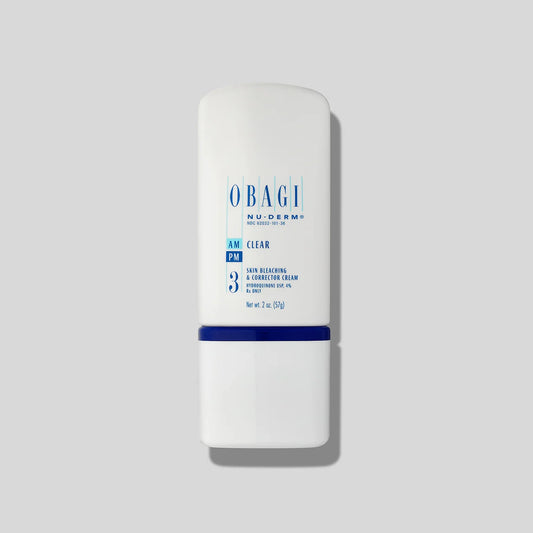
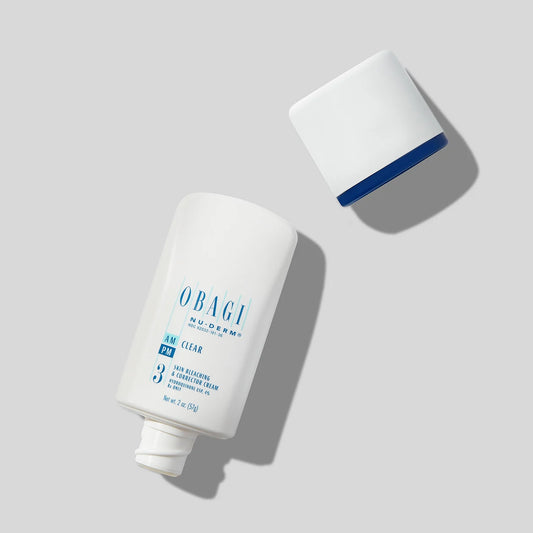
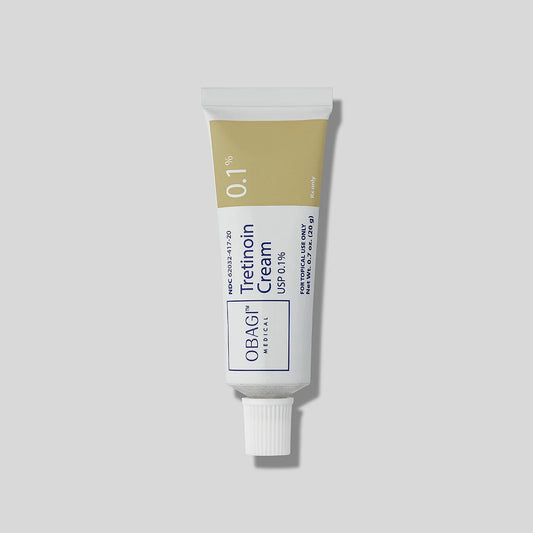
The Obagi Nu-Derm Rx system is a clinically developed multi-step protocol built around the tretinoin and hydroquinone combination. It includes Obagi Clear (hydroquinone 4%), prescription tretinoin, and supporting products for cleansing, toning, and sun protection. Clinical studies support its efficacy for hyperpigmentation and melasma when used as directed under medical supervision. All Rx components require a prescription.
Maintenance after treatment
Once target results are achieved, most prescribers recommend:
- A 2–3 month break from hydroquinone
- Continuing tretinoin at a maintenance frequency (typically 3–5 nights per week)
- Ongoing daily SPF 50
- Cycling back to hydroquinone if pigmentation returns, under prescriber guidance
For broader context on treating hyperpigmentation, see our medical-grade skincare routine for hyperpigmentation.
When to contact your prescriber
- Severe or persistent redness, burning, or blistering
- Worsening pigmentation after 12 weeks of consistent use
- Blue-black discolouration of the skin (possible ochronosis — stop immediately)
- Signs of allergic reaction (urticaria, swelling)
- Any uncertainty about whether to continue or adjust treatment
Frequently asked questions
- Can I use tretinoin and hydroquinone at the same time?
- Yes — this combination is a well-established clinical protocol for hyperpigmentation and melasma. Both are prescription-only in the UK and should be used under medical supervision. A staged introduction is recommended to manage the combined irritation burden.
- Which do I apply first — tretinoin or hydroquinone?
- Most protocols recommend applying hydroquinone first, waiting for absorption, then applying tretinoin. However, some prescribers recommend the reverse. Follow your prescriber's specific instructions.
- How long can I use hydroquinone?
- Hydroquinone should not be used continuously for more than 4–6 months without a break. Prolonged unsupervised use carries a risk of ochronosis. Your prescriber will advise on an appropriate treatment cycle.
- Why does my pigmentation look darker when I start?
- Temporary darkening of pigmentation in the early weeks is a recognised response as surface melanin is brought up through accelerated cell turnover. It is not a sign that the treatment is worsening your pigmentation. If darkening persists beyond 8 weeks, contact your prescriber.
- Do I need SPF with this combination?
- Yes — daily broad-spectrum SPF 50 is a clinical requirement, not optional. Both tretinoin and hydroquinone increase photosensitivity, and UV exposure will counteract the pigmentation-fading effects of hydroquinone.
- Can I use this combination if I have sensitive skin?
- Sensitive skin is not an absolute contraindication, but the combination carries a higher irritation burden than either ingredient alone. A lower starting strength of tretinoin, less frequent initial application, and robust barrier support are particularly important. Discuss the appropriate protocol with your prescriber.
- What is the Obagi Nu-Derm system?
- The Obagi Nu-Derm Rx system is a clinically developed multi-step skincare protocol built around the tretinoin and hydroquinone combination, with supporting products for cleansing, toning, and sun protection. All prescription components require a medical assessment prior to purchase.