
Tretinoin 0.025% vs 0.05% vs 0.1%: Which Strength is Right for You?

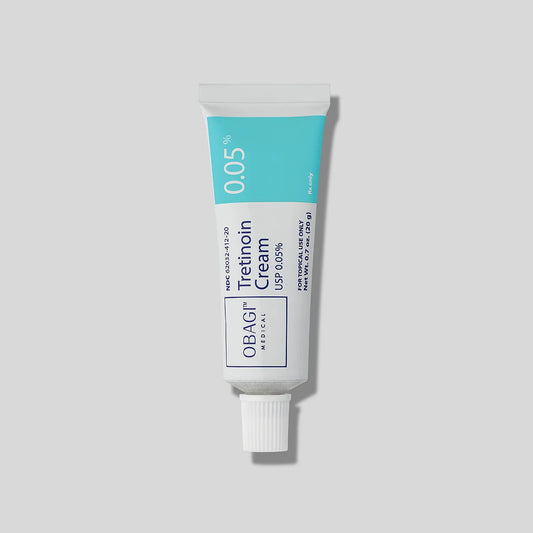
Tretinoin is available in three strengths: 0.025%, 0.05%, and 0.1%. The appropriate strength for any individual is determined by their prescriber based on skin type, the condition being treated, and prior retinoid experience. This article explains what each strength is typically used for and how they compare.
Tretinoin is a prescription-only medicine in the UK. Strength selection should be made in consultation with your prescribing clinician. This article is for educational purposes only.
How tretinoin strength affects outcomes
Higher concentrations of tretinoin produce faster and more pronounced effects on cell turnover, collagen synthesis, and melanogenesis — but also carry a higher risk of irritation, dryness, and a more intense adjustment period. The relationship between strength and efficacy is not linear: 0.025% used consistently produces clinically meaningful results; 0.1% is not necessarily more effective long-term, but acts faster and with greater initial irritation.
For a full guide to starting tretinoin safely, including how to manage the adjustment period at any strength, see our beginner's guide to starting tretinoin.
Tretinoin 0.025%
Typically prescribed for
- First-time tretinoin users
- Sensitive or reactive skin
- Mild acne or early photoageing
- Those transitioning from over-the-counter retinol
- Prevention rather than correction
What to expect
0.025% is the lowest available strength and carries the lowest risk of irritation during the adjustment period. Clinical studies confirm it is effective for improving skin texture, reducing fine lines, and treating mild to moderate acne with consistent use. Results in texture typically become noticeable within 6–8 weeks; significant anti-ageing benefits develop over 3–6 months.
Tretinoin 0.05%
Typically prescribed for
- Those who have tolerated 0.025% for several months
- Moderate acne or sun damage
- Normal to oily skin types
- Long-term maintenance once tolerance is established
What to expect
0.05% is often considered the most broadly useful strength — effective enough to produce noticeable results more quickly than 0.025%, while typically causing less irritation than 0.1%. Many prescribers use this strength for long-term maintenance. Texture improvements are often visible within 4–6 weeks; meaningful anti-ageing results within 2–4 months.
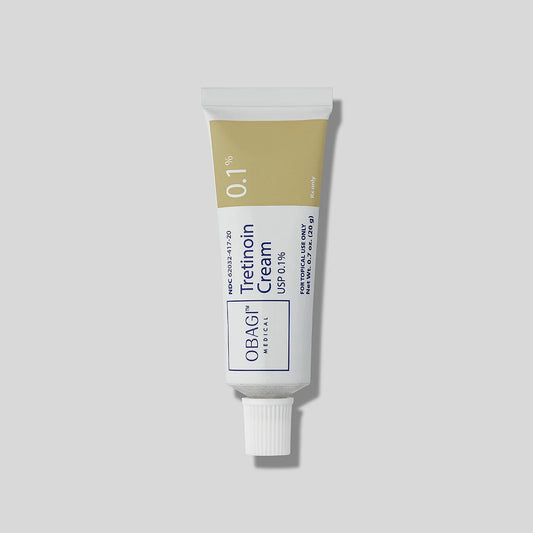
Tretinoin 0.1%
Typically prescribed for
- Experienced tretinoin users with established tolerance
- Severe acne or significant photoageing
- Those who have not achieved desired results at lower strengths
- Thicker or more resilient skin types
What to expect
0.1% is the highest available strength and carries the greatest risk of irritation, peeling, and a more intense adjustment period. It should only be used after successfully tolerating lower concentrations, or under specific medical guidance. Results may appear more quickly, but the adjustment period is typically more challenging — increased peeling and redness are common in the first 8–12 weeks.
Comparison at a glance
| Factor | 0.025% | 0.05% | 0.1% |
|---|---|---|---|
| Irritation risk | Low | Moderate | Higher |
| Typically suited to | Beginners, sensitive skin | Intermediate users, maintenance | Experienced users, severe concerns |
| Texture improvement | 6–8 weeks | 4–6 weeks | 3–4 weeks |
| Adjustment period | 4–8 weeks | 6–10 weeks | 8–12 weeks |
Switching strengths
Transitioning from a lower to a higher strength is common after 3–6 months of consistent use, once tolerance is established and results have plateaued. The transition should be discussed with your prescriber. When moving up, most prescribers recommend restarting at a lower frequency (2–3 nights per week) and building back up, as a mild re-adjustment period is typical.
Stepping down in strength is also appropriate if persistent irritation is affecting tolerability. A lower strength used consistently is more effective than a higher strength used sporadically due to irritation.
Application principles that apply at every strength
- Apply to completely dry skin — wait 20–30 minutes after cleansing
- Use a pea-sized amount for the entire face
- Apply at night only
- Use a fragrance-free moisturiser after application
- Wear broad-spectrum SPF 50 every morning without exception
- Avoid other active ingredients during the initial adjustment period
For a detailed step-by-step application guide and advice on managing the adjustment period, see our beginner's guide to starting tretinoin. For information on what to expect during the initial purge phase, see our article on the tretinoin purge.
Frequently asked questions
- Which tretinoin strength is most effective?
- Efficacy depends on the condition being treated and individual skin tolerance. Higher strengths act faster but carry greater irritation risk. 0.025% used consistently produces clinically meaningful results. The most effective strength is the highest one you can tolerate consistently — which is why most prescribers start low and increase gradually.
- Can I start at 0.1% if I want faster results?
- This is a decision for your prescriber. Starting at 0.1% without prior retinoid tolerance significantly increases the risk of severe irritation, barrier disruption, and early discontinuation — which ultimately delays results. Most prescribers recommend building tolerance at a lower strength first.
- How long should I use one strength before moving up?
- Typically 3–6 months of consistent, well-tolerated use at the current strength before discussing an increase with your prescriber. Results should also have plateaued before increasing strength is considered.
- Is 0.05% stronger than retinol?
- Yes, significantly. Retinol requires two conversion steps in the skin before becoming active retinoic acid. Tretinoin at any strength is already in its active form, making it considerably more potent than equivalent concentrations of retinol.
- What happens if I use too high a strength?
- Excessive irritation, barrier disruption, severe peeling, and prolonged sensitivity are the most common consequences. In some cases this leads to discontinuation, which negates any benefit. If you are experiencing persistent severe irritation, contact your prescriber.
- Does a higher strength cause a worse purge?
- Higher strengths may produce a more intense purge, though this varies by individual. For a full explanation of the purge, see our article on the tretinoin purge.
- Can I use tretinoin in summer?
- Yes — at any strength. The idea that tretinoin should be paused in summer is a misconception. Photosensitivity is managed by applying at night and wearing SPF 50 daily. See our article on using tretinoin in summer for more detail.