
No Nonsense Guide to buying Tretinoin in the U.K

Tretinoin is a prescription-only medicine in the UK. It cannot be purchased over the counter, and any source offering it without a valid prescription is operating outside UK law. This guide explains the legal routes to access tretinoin, what to look for in a provider, and what to avoid.
This article is for educational purposes only and does not constitute medical advice.
Why tretinoin requires a prescription in the UK
Tretinoin (all-trans retinoic acid) is classified as a prescription-only medicine (POM) by the MHRA. This classification exists because tretinoin is a potent active with meaningful contraindications — including pregnancy, certain skin conditions, and interactions with other treatments — that require clinical assessment before use. The prescription requirement is a patient safety measure, not a commercial one.
How to obtain a tretinoin prescription in the UK
In person
A private GP, dermatologist, or aesthetic clinician can assess your suitability and issue a prescription following a face-to-face consultation. Your prescription can then be dispensed at a GPhC-registered pharmacy. In-person consultation is particularly appropriate for complex skin concerns, combination treatments, or where ongoing monitoring is needed.
Online
Regulated online prescribing services allow you to complete a medical assessment remotely. A UK-registered clinician reviews your information and, if clinically appropriate, issues a prescription. The product is then dispensed by a registered pharmacy and delivered to you. This route is legal, regulated, and widely used for straightforward cases and repeat prescriptions.
The process typically involves completing a detailed medical questionnaire covering your skin concerns, medical history, current medications, and any contraindications. Some services also offer video consultations.
What to look for in a provider
Whether accessing tretinoin in person or online, a legitimate provider will:
- Require a medical assessment before issuing any prescription
- Use UK-registered prescribers (GMC-registered doctors, or NMC-registered nurse prescribers)
- Dispense through a GPhC-registered pharmacy
- Supply clearly labelled, genuine products
- Provide aftercare guidance and a route to contact your prescriber with questions
Risks of unlicensed and grey-market sources
A significant number of international websites offer tretinoin without a prescription, often at low prices. These sources carry serious risks:
- Products may be counterfeit, contaminated, or incorrectly labelled
- Stated concentrations may be inaccurate
- No clinical assessment means no screening for contraindications such as pregnancy, active skin conditions, or drug interactions
- No aftercare or monitoring if problems arise
Tretinoin used at the wrong strength, on an unsuitable skin type, or without appropriate monitoring can cause significant skin damage. The regulatory framework exists to prevent this.
Which tretinoin formulations are available in the UK?
Several formulations are available through licensed UK prescribers, including:
- Retin-A — the original branded tretinoin, available as gel and cream in multiple strengths
- Retirides — a European formulation available at 0.1%
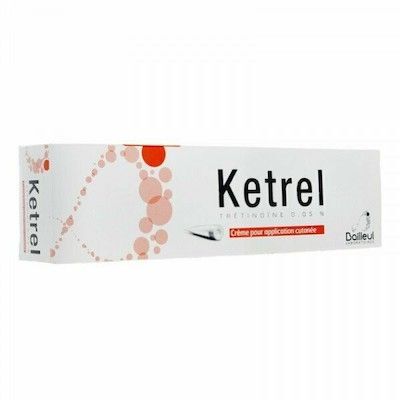
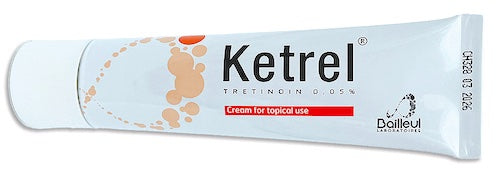
- Ketrel — a well-established cream formulation at 0.05%
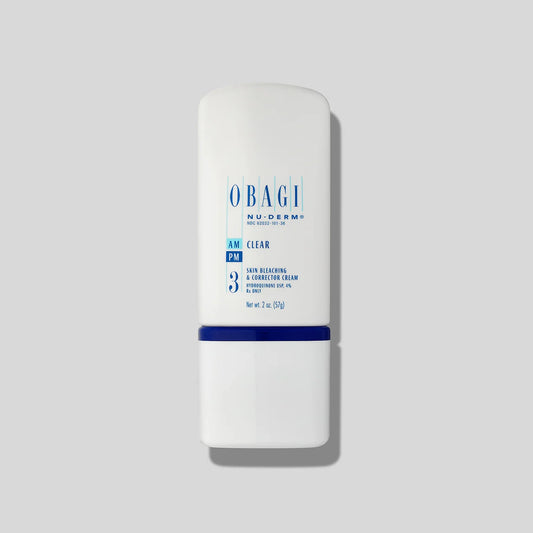
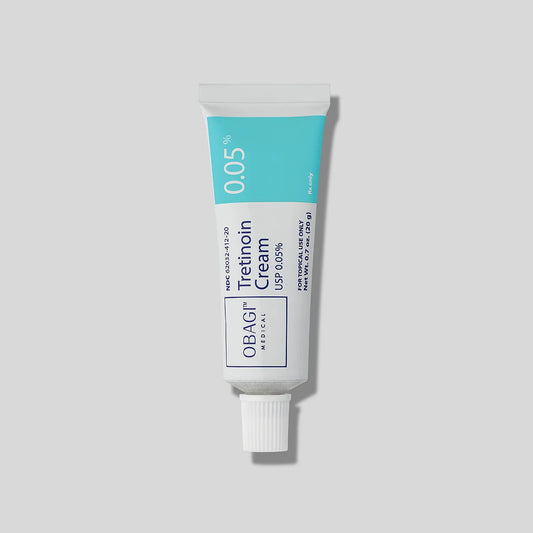
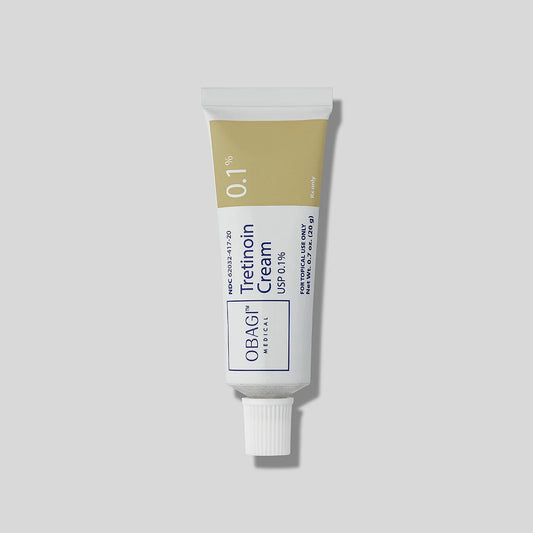
- Obagi tretinoin — cream and gel formulations at 0.025%, 0.05%, and 0.1%
The appropriate formulation and strength depends on your skin type, the condition being treated, and your prior experience with retinoids. For a detailed comparison of strengths, see our guide to tretinoin 0.025% vs 0.05% vs 0.1%.
Frequently asked questions
Can I buy tretinoin without a prescription in the UK?
No. Tretinoin is a prescription-only medicine in the UK. Any source offering it without a valid prescription is not operating legally. This applies to online marketplaces, overseas websites, and any retailer not using a registered UK prescriber.
Can I get tretinoin on the NHS?
The NHS does not routinely prescribe tretinoin for cosmetic indications such as anti-ageing, pigmentation, or skin texture. It may be prescribed for acne in some cases, but access is limited. For cosmetic indications, a private prescription is required.
How do I know if an online provider is legitimate?
A legitimate provider will require a medical assessment before issuing any prescription, use GMC or NMC-registered prescribers, and dispense through a GPhC-registered pharmacy. You can verify pharmacy registration at the GPhC website and prescriber registration at the GMC or NMC websites.
What strength of tretinoin will I be prescribed?
This is determined by your prescriber based on your skin type, the condition being treated, and your prior retinoid experience. See our guide to tretinoin strengths for a detailed comparison.
What should I expect when I start tretinoin?
An adjustment period of several weeks is normal, during which dryness, flaking, and a temporary increase in breakouts (the purge) may occur. See our beginner's guide to starting tretinoin and our article on the tretinoin purge for more detail.
Is tretinoin safe to use long-term?
Yes, under medical supervision. Tretinoin has decades of clinical evidence supporting its long-term safety and efficacy. Regular follow-ups with your prescriber allow for monitoring and dose adjustment as needed.